
Guide
Expecting a monster to move like nothing else
How movement works in R.E.P.O. — the body every monster shares, the ones that tumble, and the three kinds of jump — so a monster's approach can be read rather than only survived.
Applies to
0.4.0, read from the copy of the game this site was built from (see the sources page)
Before you start
- A run with monsters awake
- Somewhere to watch from
- A monster that is not walking
Steps
- Do not think of a monster as walking; think of its body following a target.
a shared physical body follows a target rather than each monster owning its movement - Expect some of them to fall differently.
the body can use gravity or a gravity value of its own - Notice that idling and chasing move differently, not only faster or slower.
idle and chasing each have their own position and rotation speeds with their own smoothing, plus rotation damping - Give a monster room to warp, and watch for the distance at which it stops moving.
there are separate warp distances for idle and for chasing, and a distance below which the body counts as not moving - Expect at least one monster to come at you by tumbling rather than walking.
a monster moves by tumbling rather than walking, with a tumble loop kept locally and across the level - Treat a jump as a behaviour with a surface, not as part of walking.
jumping is its own behaviour with handling for the surface it lands on, an upward and a sideways force and a delay before and after - Know that a monster stuck in one place behaves differently from one that is merely jumping.
a stuck jump is limited by a count and has its own forces and delays - Know that a gap is its own case as well.
a gap jump has an upward and a forward force with its own delays, and landing can put the navigation agent back onto the surface
Common mistakes
- Timing a swing as if every monster walked at the same pace.
- Standing where a tumbling monster is about to roll.
- Assuming a monster that jumped is committed to the spot it left.
- Reading a stuck jump as the monster giving up.
Related entries
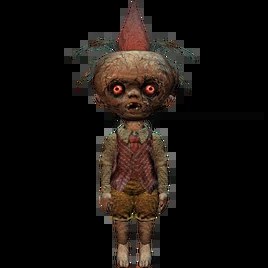 How the game behavesThe body every monster sharesA shared physical body follows a target rather than each monster owning its movement.
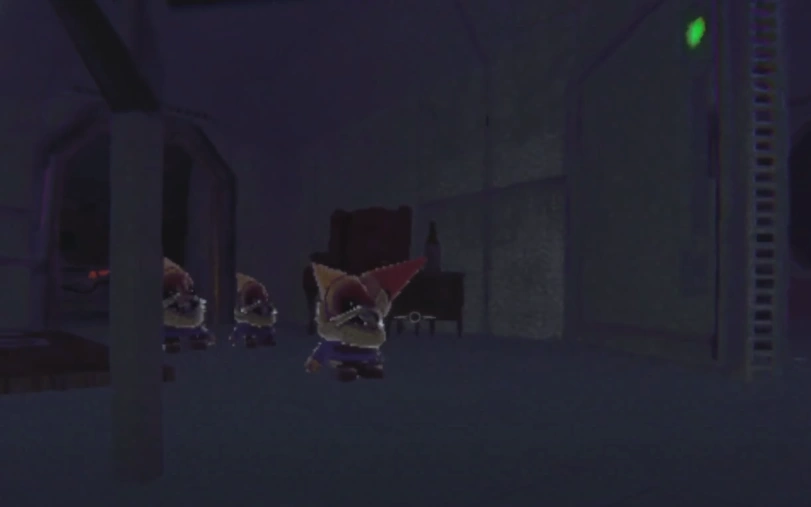 MonstersEnemies that move differentlyAt least one monster moves by tumbling rather than walking.
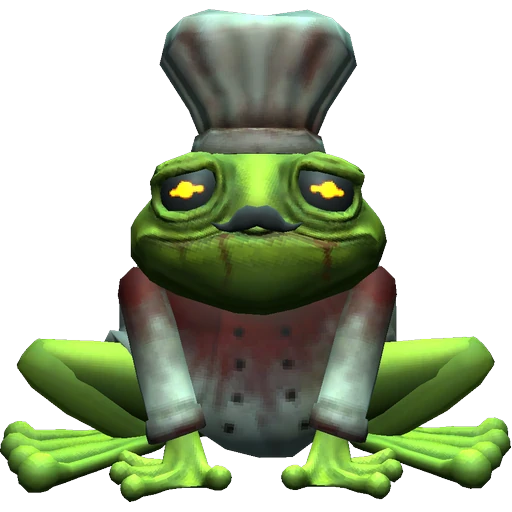 How the game behavesHow monsters jumpA surface jump has an upward and a sideways force, with a delay before the jump and a delay after landing.
Sources
A local copy of the game, read only. Grounding for each step is on the technical reference pages; no number is estimated.