
Monsters · R.E.P.O. v0.4.0 · read from a local copy
The gnomes and the pickaxe
A director keeps the gnomes as a set, with a list of them and a state of its own.
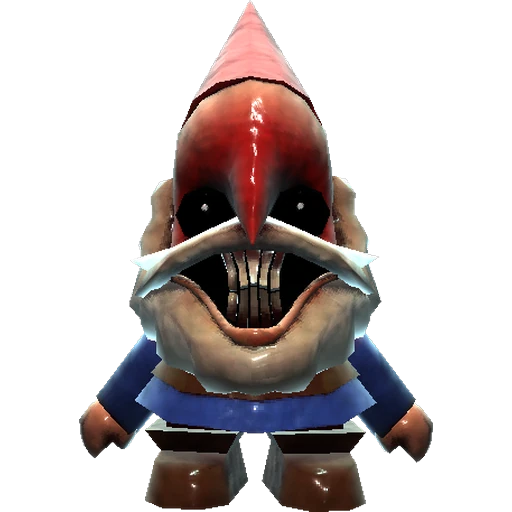
The gnomes in R.E.P.O. arrive as a group rather than one at a time: a director keeps them, each one moves at a speed between a minimum and a maximum, and a pickaxe warns you before it lands.
What the game establishes
- A director keeps the gnomes as a set, with a list of them and a state of its own. (checked against the game's own files)
- The director has a short idle and a long idle. (checked against the game's own files)
- Each gnome moves at a speed between a minimum and a maximum. (checked against the game's own files)
- They have a collider for avoiding each other and an offset for backing away. (checked against the game's own files)
- The pickaxe has a tell and a hit as separate sounds. (checked against the game's own files)
- There are sounds for spawning and despawning, footsteps, short and long movement, a jump, a landing and noticing a player. (checked against the game's own files)
- Impacts come in light, medium and heavy versions. (checked against the game's own files)
- Being stunned has an entrance and an exit sound, and there is a small thrown-while-stunned behaviour of its own. (checked against the game's own files)
- A gnome keeps a state, a rotation spring, death effects and sounds for being hurt and dying. (checked against the game's own files)
- Its animations are named one by one: idle, attack, despawn, falling, idle breaker, jump, land, move and a move outro, with a pickaxe animation beside them. (checked against the game's own files)
In play
The gnomes are not a single monster. A director keeps them as a set rather than as one creature, so a level can hold several at once and the game can decide when each of them acts.
Each gnome has a speed range. There is a lowest and a highest speed rather than one value, so two gnomes of the same kind do not move at exactly the same rate.
They keep out of each other's way. There is a collider for avoiding and an offset for backing away, which is how a group can crowd a player without standing inside one another.
The director thinks in pauses. It has a short idle and a long idle of its own, alongside a list of the gnomes it is managing and a current state, so much of what a gnome does is decided between actions rather than during them.
Interacting with one is not instant. The animation system keeps a pickaxe tell and a pickaxe hit as separate sounds, so the swing warns you before it lands.
A gnome is audible from the moment it appears. There are sounds for spawning and despawning, footsteps, short and long movement, a jump and a landing, and a notice sound for when it spots you.
Impacts come in three weights. Light, medium and heavy sounds are kept apart, which is how the same collision can sound like a nudge or like a hit.
Being stunned is a state with an entrance and an exit: there is a stun sound and a separate sound for coming out of it, along with a small behaviour of its own for the moment it is thrown after being stunned.
What this entry does not tell you: how many gnomes a level may hold, how much damage a pickaxe does, or how long the pauses are. We have not verified those numbers, so we do not print them.
Related
 MonstersEnemies that move differentlyAt least one monster moves by tumbling rather than walking.
 MonstersThe floater and how it attacksThe floater has a controller and an animator of its own rather than sharing another monster's.
Version and sources
A local copy of the game, read only. The grounding for each fact is listed on the technical reference pages; nothing here is estimated. Documented build: 0.4.0.