
Monsters · R.E.P.O. v0.4.0 · read from a local copy
The shadow and how it moves
Its pose is driven by a spring pose animator with separate bending values for the torso, head, neck and arms.
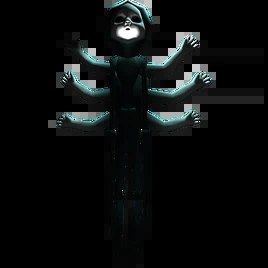
The shadow is the most articulated thing in R.E.P.O.: its pose is driven by a spring animator, its hands, eyes and hair have pivots and resting positions, and its slap has an animation curve and a ready state.
What the game establishes
- Its pose is driven by a spring pose animator with separate bending values for the torso, head, neck and arms. (checked against the game's own files)
- Both eyes, both wrists and both arms have pivots of their own, and the hands have resting positions. (checked against the game's own files)
- The head and the eyes turn at speeds of their own. (checked against the game's own files)
- The slap has an animation curve, a hand area and a flag for being ready to slap. (checked against the game's own files)
- Its sight comes from a vision point of its own. (checked against the game's own files)
- It has separate colliders for its top, for crouching and for shooting, with collision checkers and two hurt colliders. (checked against the game's own files)
- Its hair hangs on four springs, each with a pivot and a target. (checked against the game's own files)
- The body has a horizontal rotation spring and each hand has an animator of its own. (checked against the game's own files)
- An effect of its own draws veins across the player screen. (checked against the game's own files)
- The third and the fourth hair springs have pivots and targets of their own as well. (checked against the game's own files)
- A separate animator carries a shockwave and two whoosh lines for it. (checked against the game's own files)
- The effect that draws veins across the player screen has its own vein and hand renderers and a fade in and out speed. (checked against the game's own files)
In play
The shadow is built to move like a body rather than like a single shape. Its pose is driven by a spring pose animator with separate bending values for the torso, the head, the neck and each arm, which is why it folds and leans instead of turning as a block.
Its limbs have pivots of their own. Both eyes, both wrists and both arms have their own pivot and point, and the hands have resting positions, so the monster can hold its hands down and then reach rather than only swinging.
It turns at two speeds. There is a speed for the head and a separate one for the eyes, which is how a large creature can take its time while its gaze snaps.
Its slap is modelled in parts. There is an animation curve for the slap, a hand area to detect a player, a second area underneath, and a flag for the hand being ready to slap, which is why the attack has a moment of warning rather than arriving at random.
It sees from a point of its own. The vision transform belongs to the monster rather than being shared, and the vision system behind it is the one that weighs what it sees by whether you are standing, crouching or crawling.
It carries several colliders rather than one. There is a collider for the top, a set for crouching, a set for shooting and checkers for collisions, along with a collider for being hurt and a second hurt collider described as a wave, so what can hit it depends on where it is.
Its hair hangs on four springs, each with a pivot and a target, and the whole body has a horizontal rotation spring, so the parts lag behind the movement rather than following it exactly.
Both hands have their own animators, and there is an effect of its own that draws veins across the player screen, which is how the game shows that this one has hold of you.
That screen effect is built rather than painted on. It keeps a renderer for the veins and another for a hand, and it fades in and out at speeds of its own, which is why the mark appears and lifts rather than blinking on.
What this entry does not tell you: how much damage it does, how fast it moves, or how long the warning before a slap lasts. We have not verified those numbers, so we do not print them.
Related
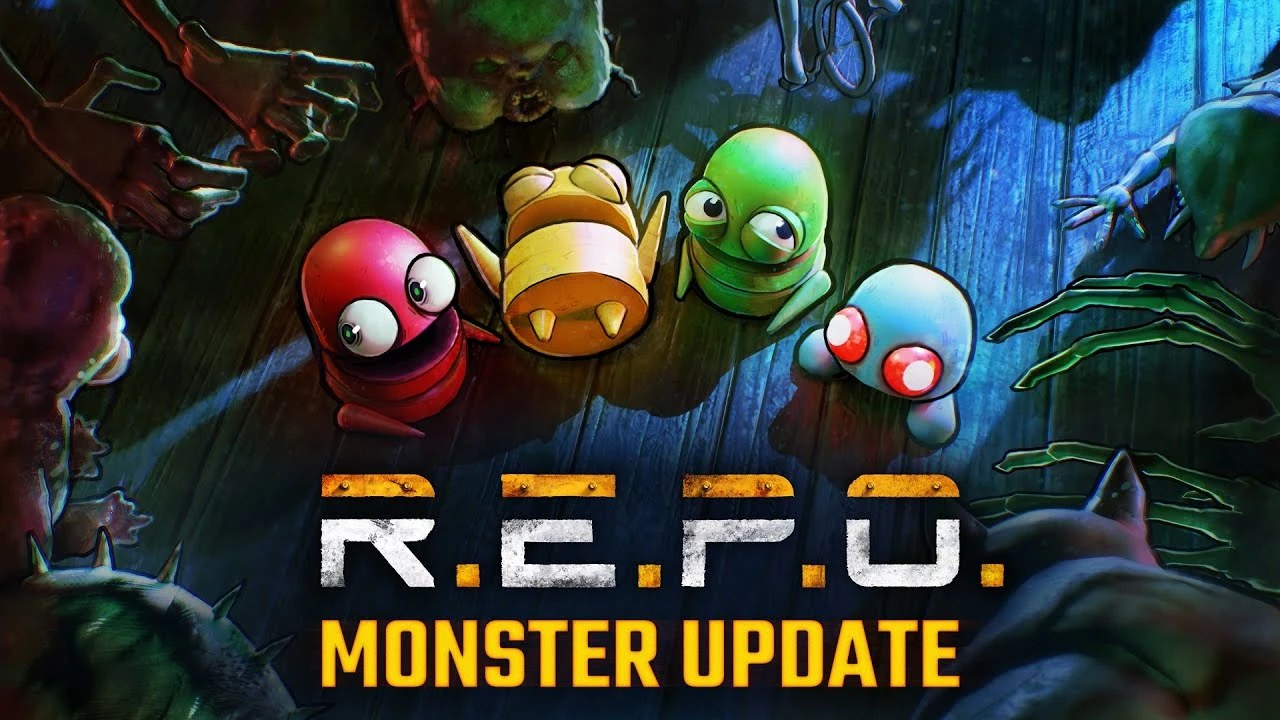 MonstersEnemies and what they doThe game defines several distinct monsters rather than one enemy type.
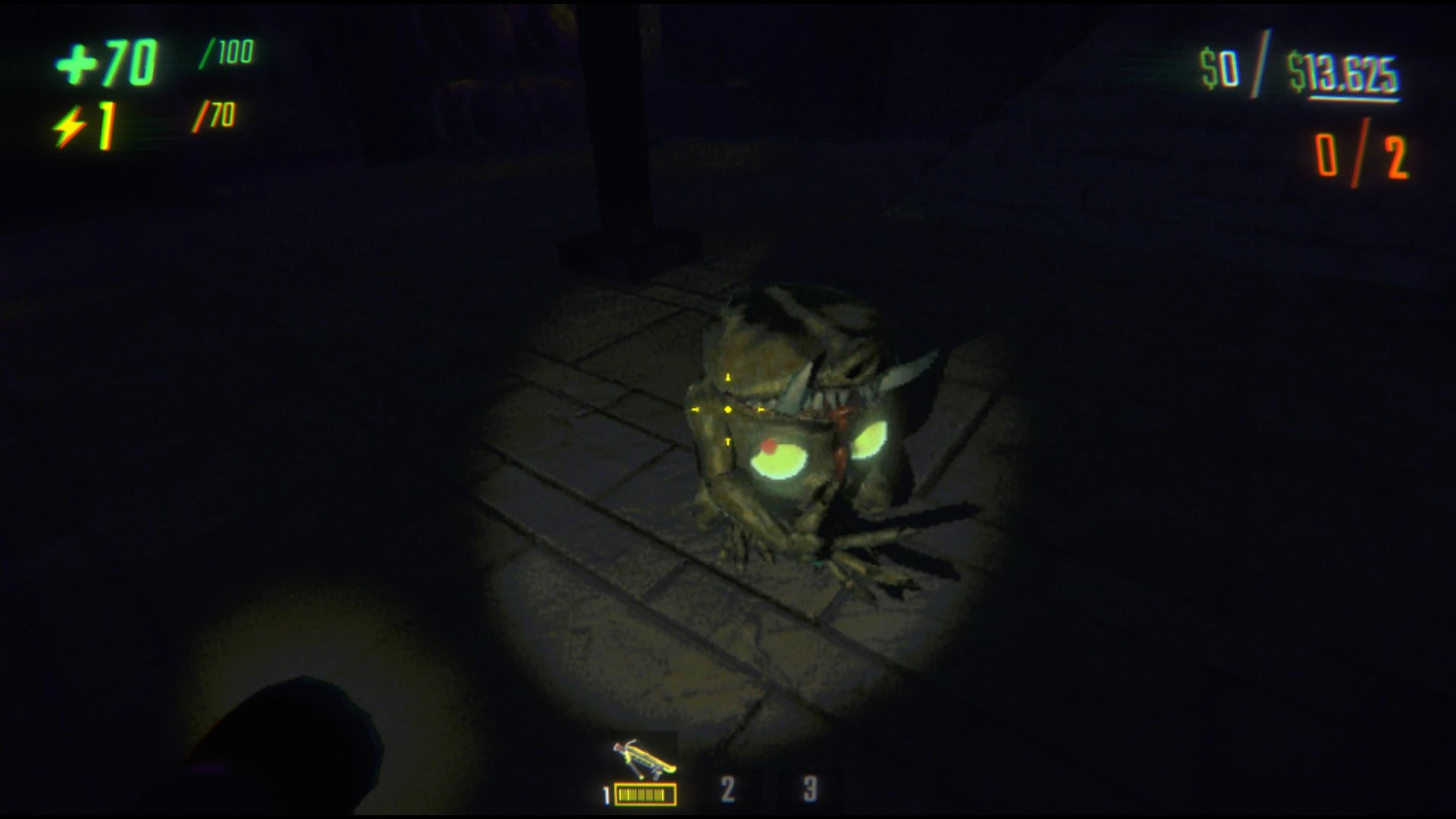 MonstersWhen a monster has youA monster exists whose behaviour is built around holding a player.
Version and sources
A local copy of the game, read only. The grounding for each fact is listed on the technical reference pages; nothing here is estimated. Documented build: 0.4.0.